Epigenetic Reader Domain
Epigenetic regulators of gene expression and chromatin state include so-called writers, erasers, and readers of chromatin modifications.Well-characterized examples of reader domains include bromodomains typically binding acetyllysine and chromatin organization modifier (chromo), malignant brain tumor (MBT), plant homeodomain (PHD), and Tudor domains generally associating with methyllysine. Research on epigenetic readers has been tremendously influenced by the discovery of selective inhibitors targeting the bromodomain and extraterminal motif (BET) family of acetyl-lysine readers. The human genome encodes 46 proteins containing 61 bromodomains clustered into eight families. Distinct experimental approaches are used to identify the first BET inhibitors, GSK 525762A and (+)-JQ-1.
The Polycomb group (PcG) protein, enhancer of zeste homologue 2 (EZH2), has an essential role in promoting histone H3 lysine 27 trimethylation (H3K27me3) and epigenetic gene silencing. This function of EZH2 is important for cell proliferation and inhibition of cell differentiation, and is implicated in cancer progression. Cyclin-dependent kinases regulate epigenetic gene silencing through phosphorylation of EZH2. In many types of cancers including lymphomas and leukemia, EZH2 is postulated to exert its oncogenic effects via aberrant histone and DNA methylation, causing silencing of tumor suppressor genes.
p300/CBP is not only a transcriptional adaptor but also a histone acetyltransferase.
Epigenetic Reader Domain Isoform Specific Products
-
Epigenetic Reader Domain
(442)
View all products
-
Brd
(3)
View all products
-
BRPF1
(9)
View all products
-
BRPF2
(5)
View all products
-
BRPF3
(2)
View all products
-
BRD2
(61)
View all products
-
BRD3
(57)
View all products
-
BRD4
(285)
View all products
-
BRDT
(26)
View all products
-
CECR2
(4)
View all products
-
BD1
(9)
View all products
-
BD2
(9)
View all products
-
BRD7
(9)
View all products
-
BRD9
(54)
View all products
-
BET
(21)
View all products
-
BAZ
(1)
View all products
All Product Categories
-
Epigenetic Reader Domain Inhibitors
(590)
View all products
-
Epigenetic Reader Domain Agonists
(3)
View all products
-
Epigenetic Reader Domain Antagonists
(2)
View all products
-
Epigenetic Reader Domain Activators
(10)
View all products
-
Epigenetic Reader Domain Modulators
(3)
View all products
-
Epigenetic Reader Domain Chemicals
(2)
View all products
-
Epigenetic Reader Domain Inducer
(1)
View all products
-
Epigenetic Reader Domain Degraders
(157)
View all products
-
Epigenetic Reader Domain Controls
(12)
View all products
-
Epigenetic Reader Domain Substrate
(1)
View all products
-
Epigenetic Reader Domain Ligands
(26)
View all products
-
Epigenetic Reader Domain Produits associés (884)
Produits associés (884)

-
Anticorps (109)
-
Epigenetic Reader Domain Isoform Comparison
-
MI-3
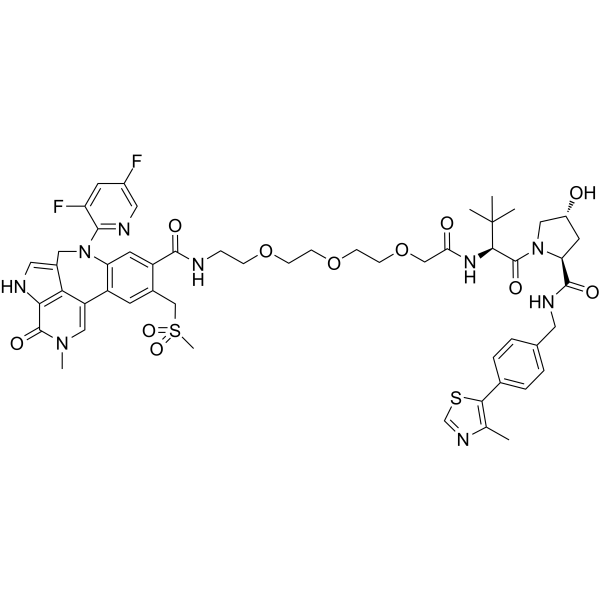
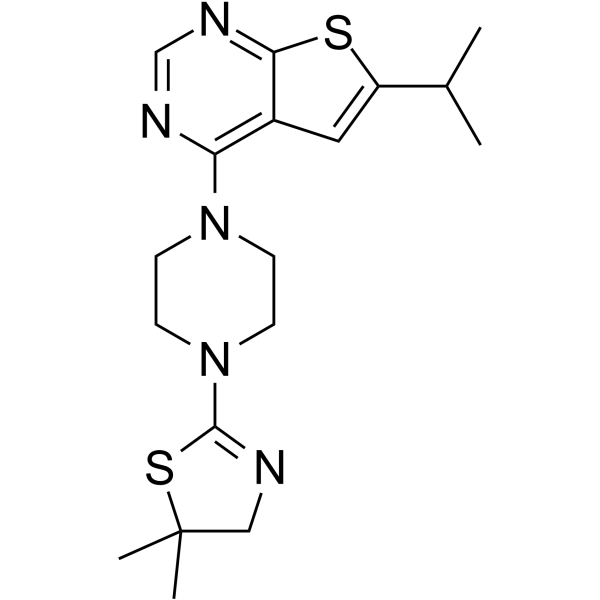 0 ImagesSynonyms: Menin-MLL inhibitor 3MI-3 (Menin-MLL inhibitor 3) is a potent and high affinity menin-MLL inhibitor with an IC50 of 648 nM and a Kd of 201 nM.
-
ZL0590
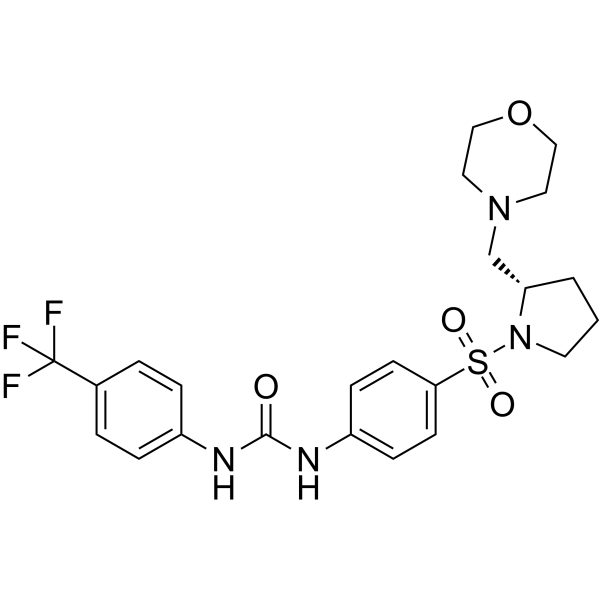 0 ImagesZL0590 is a potent, orally active BRD4 BD1-selective inhibitor with an IC50 of 90 nM for human BRD4 BD1. ZL0590 exhibits significant anti-inflammatory activities. ZL0590 can reduce mucosal inflammation in animal models of inflammatory bowel disease and restores tissue architecture. ZL0590 can be used in research on inflammatory diseases such as inflammatory bowel disease.
-
RVX-297
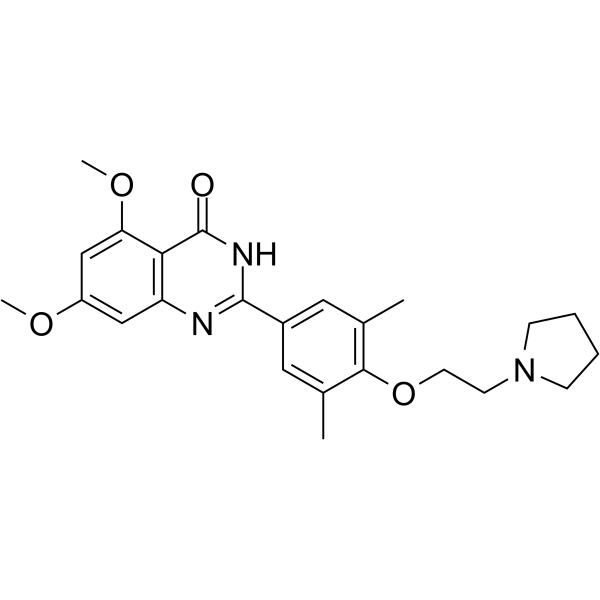 0 ImagesCat. No.: HY-114504CAS No.: 1044871-04-6RVX-297 is a potent, orally active BET bromodomain inhibitor with selectivity for BD2. RVX-297 shows IC50s of 0.08, 0.05, and 0.02 μM for BRD2(BD2), BRD3(BD2), and BRD4(BD2), respectively. RVX-297 suppresses inflammatory gene expression in multiple immune cell types. RVX-297 is effective in acute inflammation and autoimmunity models.
-
UMB-32
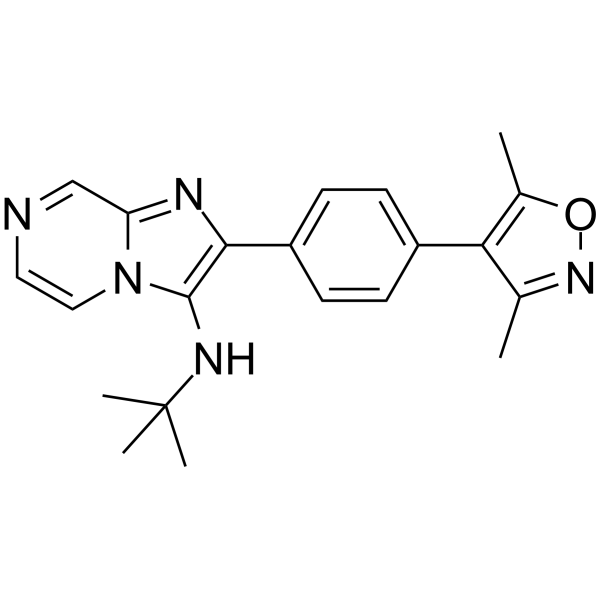 0 ImagesUMB-32, a potent, selective BRD4 inhibitor, binds BRD4 with the Kd of 550 nM, and IC50 of 637 nM. UMB-32 also shows potency against TAF1, a bromodomain-containing transcription factor.
-
L1BC8
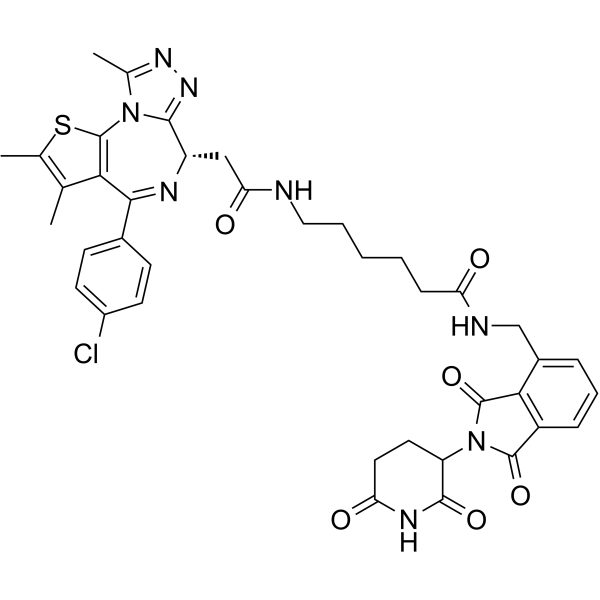
 0 ImagesL1BC8 (compound 13a) is a BRD4 PROTAC degrader with anticancer effects. L1BC8 is also a drug-linker conjugate for ADC that can be used for the synthesis of ADCs. The resulting BRD4-degrader antibody conjugates exhibit potent and antigen-dependent BRD4 degradation and antiproliferation activities in cell-based experiments.
-
UNC 669
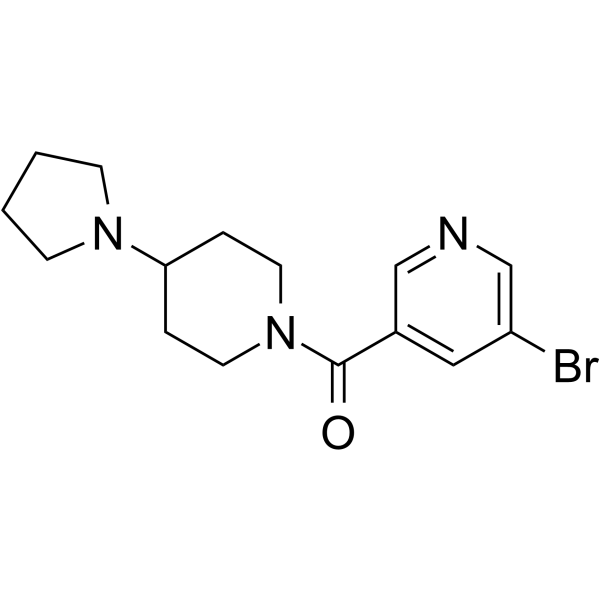 0 ImagesUNC 669, a ligand for a methyl-lysine binding domain, is a potent L3MBTL1 (IC50=4.2 uM) and L3MBTL3 (3.1 uM) inhibitor.
-
BET-IN-31
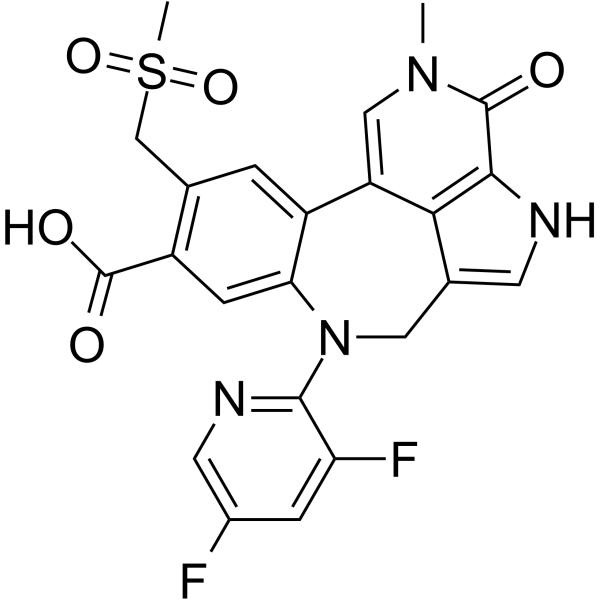 0 ImagesBET-IN-31 is a potent BET inhibitor and a ligand for target BRD4 protein for PROTACT GNE-987 (HY-129937A).
-
CeMMEC1
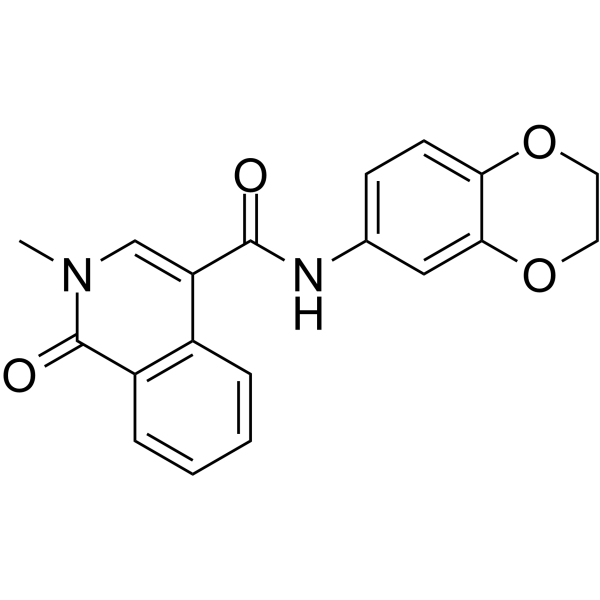 0 ImagesCeMMEC1 is an inhibitor of BRD4, and also has high affinity for TAF1, with an IC50 of 0.9 μM for TAF1, and a Kd of 1.8 μM for TAF1 (2).
-
JQ1-TCO
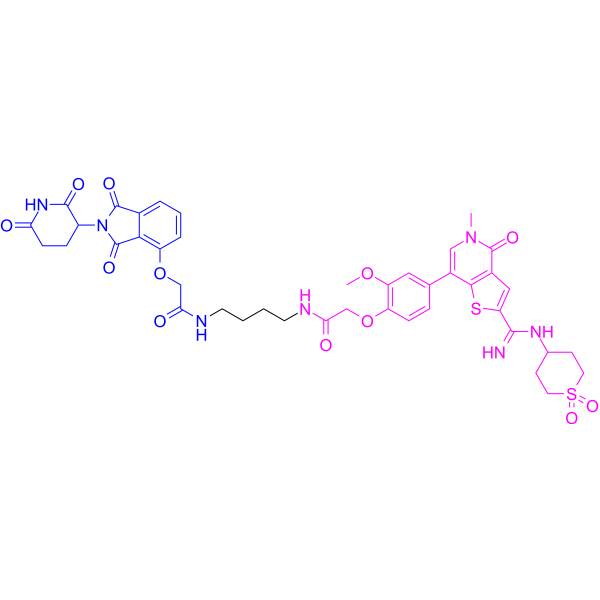
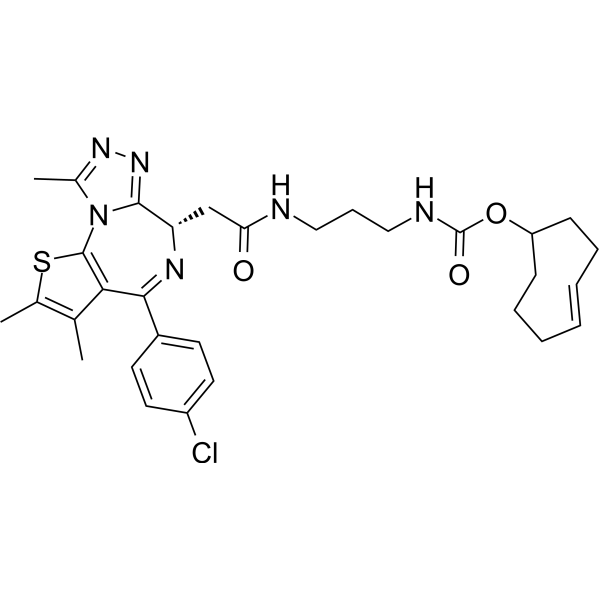 0 ImagesCat. No.: HY-148864Pureté: 99.95%JQ1-TCO is the double bond E configuration of JQ1-TCO (HY-148864A). JQ1-TCO is a derivative of JQ1 (HY-13030), an inhibitor of BET. JQ1-TCO is suitable for click chemistry and can be used as molecular probes in vitro and in vivo.
-
SRX3177
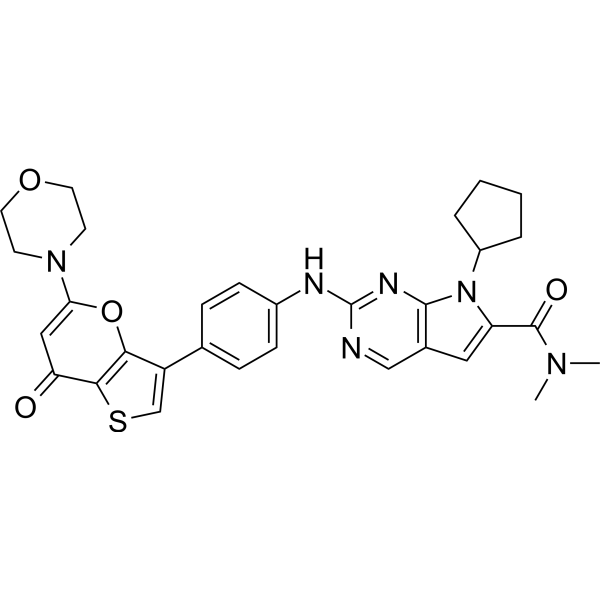 0 ImagesSRX3177 is a triple inhibitor of CDK4/6, PI3K, and BRD4, with IC50s of <2.5 nM (CDK4), 3.3 nM (CDK6), 33 nM (BRD4 BD1), 89 nM (BRD4 BD2), 79 nM (PI3Kα), 83 nM (PI3Kδ), 3.18 μM (PI3Kγ) , respectively. SRX3177 blocks the interaction between the SARS-CoV-2 E protein and the BRD2/4 BD1 domain, restores E protein-attenuated NF-κB activity. SRX3177 exerts broad cytotoxic activity against cancer cells. SRX3177 can be used for the study of anti-SARS-CoV-2 and cancer.
-
MI-136
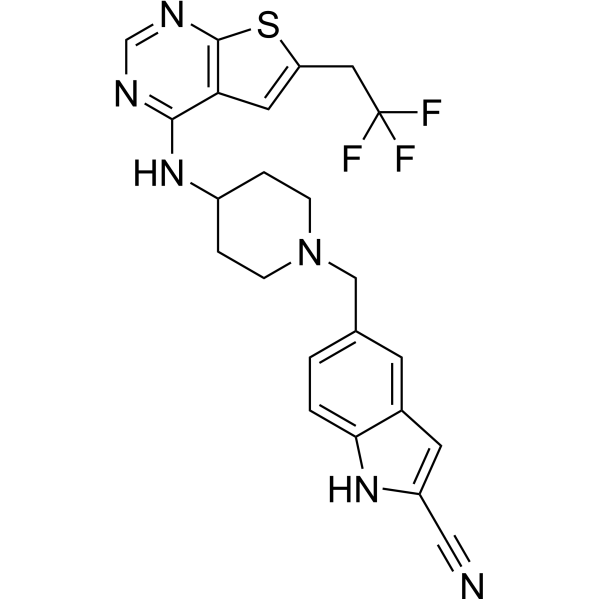 0 ImagesMI-136 is an inhibitor of the menin-MLL protein-protein interaction (PPI), with an IC50 of 31 nM and a Kd of 23.6 nM. MI-136 shows to block AR signaling and has the potential for the study in castration-resistant tumors.
-
CBP/p300-IN-1
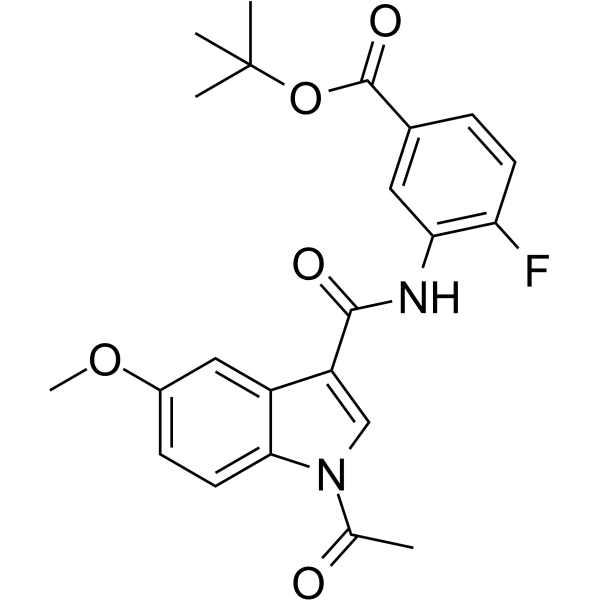 0 ImagesCBP/p300-IN-1 is a CBP/EP300 bromodomain inhibitor.
-
UNC926
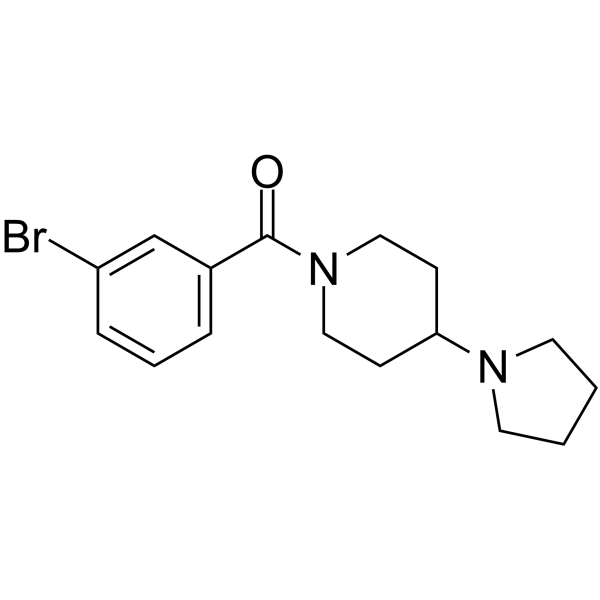 0 ImagesUNC926 is a methyl-lysine (Kme) reader domain inhibitor that inhibits L3MBTL1 with an IC50 of 3.9 μM.